
Site News
New this month: your Sleeper league gets its own homepage
Type your Sleeper username and the site rebuilds itself around your league. Plus legends, college pages and new player cards.
FHFantasy Homepage desk · · 4 min read
A month ago this was a rankings site with a trade calculator and some games. It still is, but the biggest thing we've built since launch went live on 1 November, and most people haven't found it yet. So here's the tour.
Everything below is free. None of it needs an account with us. The screenshots use a made-up league, Sunday Scaries Dynasty, so no real managers were harmed.
Your league, on one screen
Open the homepage, click Leagues and type your Sleeper username. No password: we only read what Sleeper already makes public, and your leagues are kept on your own device. Dynasty, redraft, keeper and best ball all work.
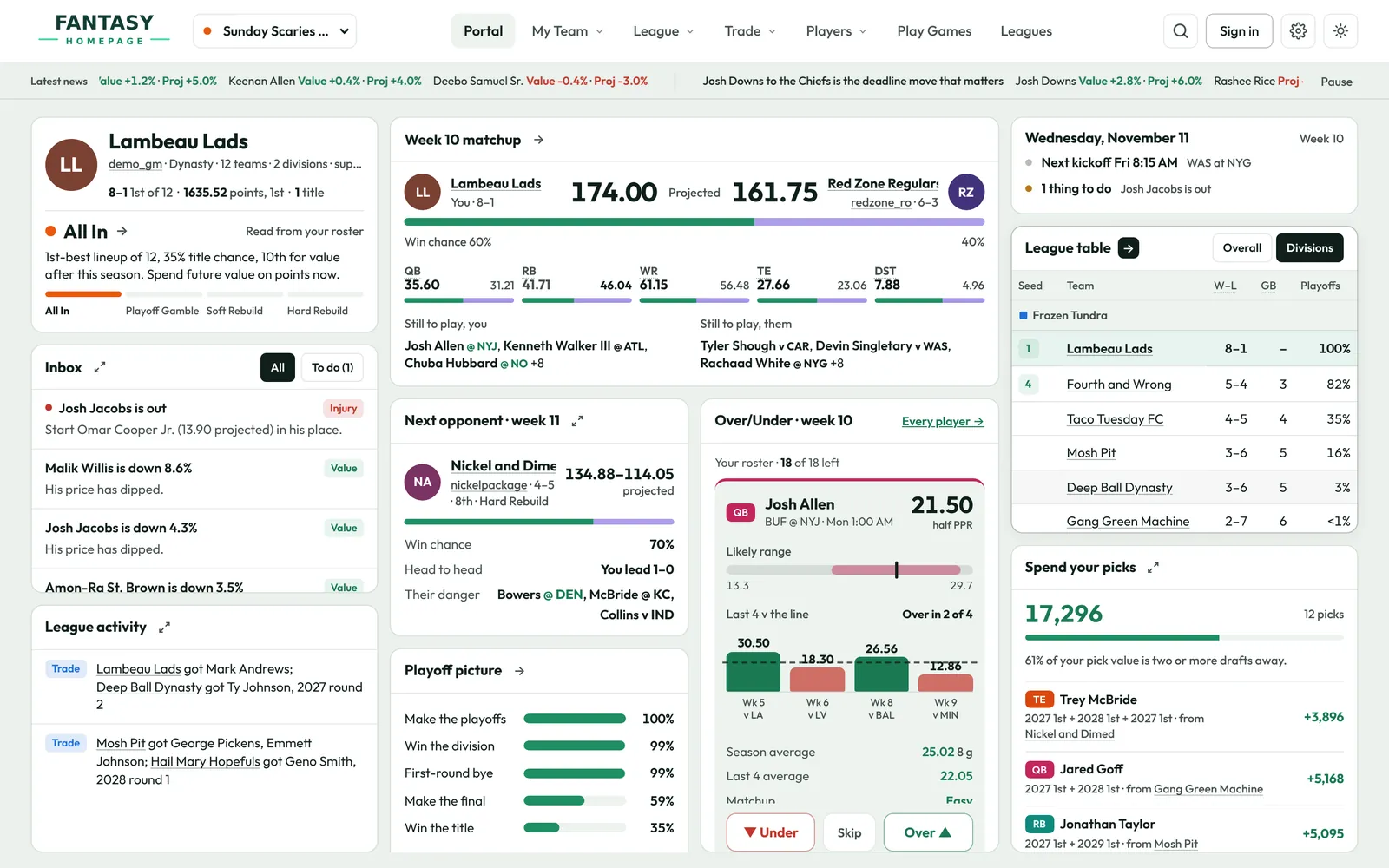
Pick a league and Home turns into its portal. This week's matchup sits on top, with the win chance and who each side still has to play. Down the left: your team, the win window we read from your roster, and an inbox that flags the things you need to act on (an injured starter, a player whose price just moved). On the right: today's kickoffs, the league table and what your draft picks could buy. Every widget opens the full tab behind it.
Matchups that show the whole roster
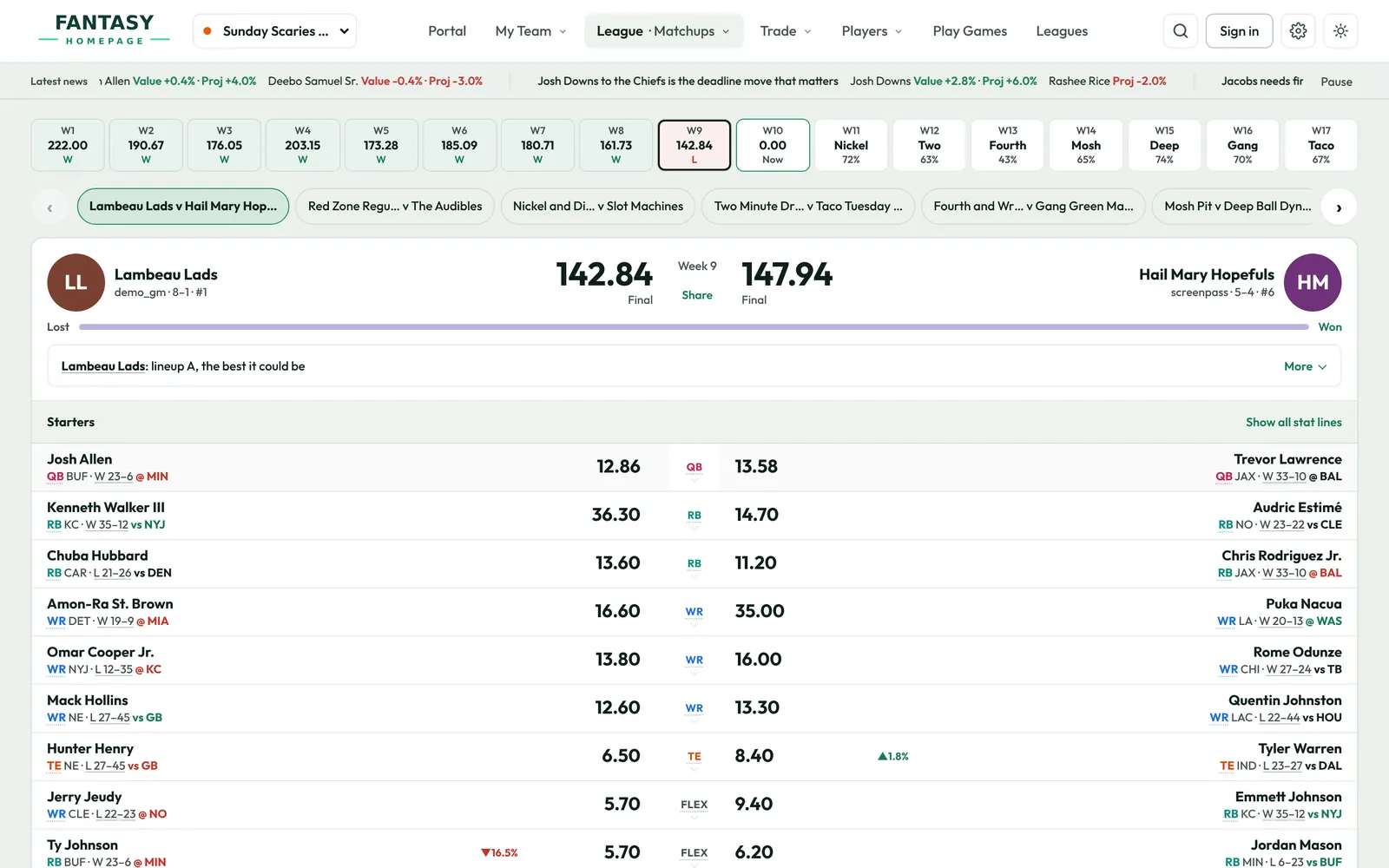
Every matchup in the league, not just yours, with both full rosters and the bench. Scores update while games are on, players on bye are marked, and the floor-to-ceiling bar shows how each player's week could go. Best ball leagues fill the lineup the way Sleeper does: a player who's scored beats one who hasn't played yet. The strip across the top flicks through the season, with your result and next week's win chance in each box.
A league table that looks ahead
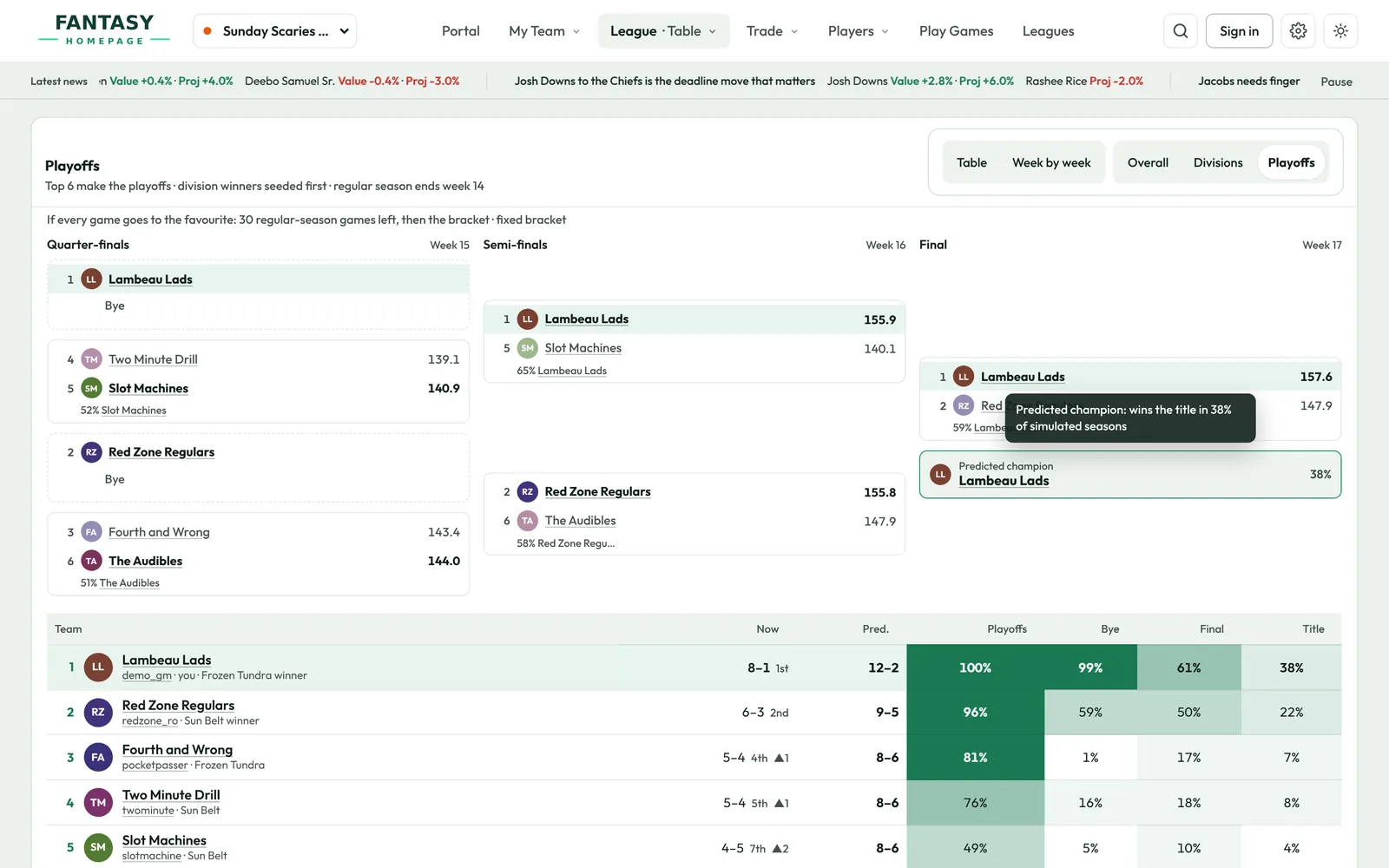
The table has everything you'd expect (record, points for and against, streak, division record) and a few things you wouldn't: all-play record, luck, and a projection for every game left. Switch to Playoffs and you get the bracket as it would land if the favourite won every game, with each team's odds of a bye, the final and the title.
Power Rankings by what each team owns
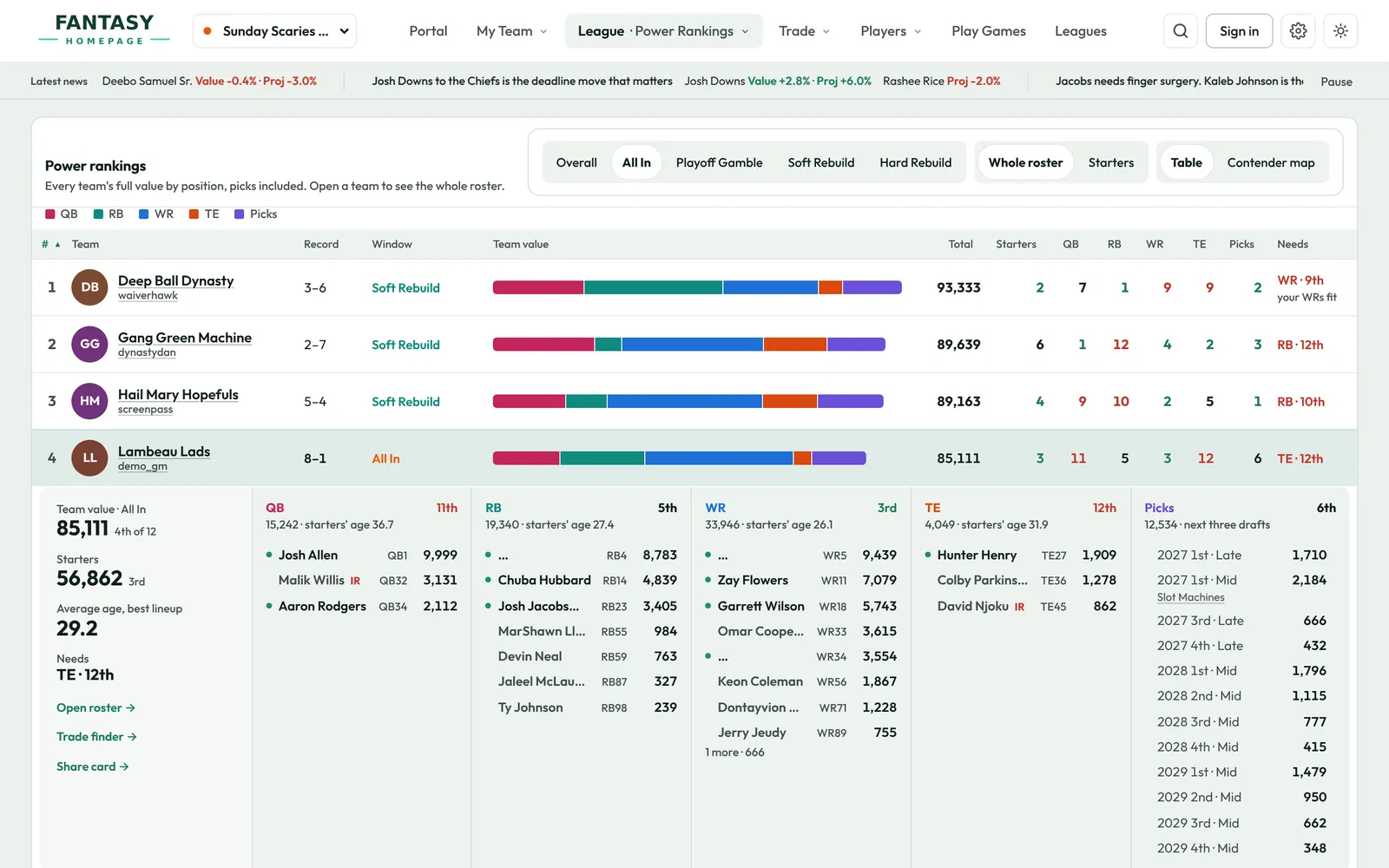
Power Rankings value every roster in full, split by position and picks, so you can see at a glance who's thin at tight end and who's sitting on a stack of firsts. Open any team in place to see its players. Rank by the whole roster or starters only, and by any win window.
Your roster, read for you
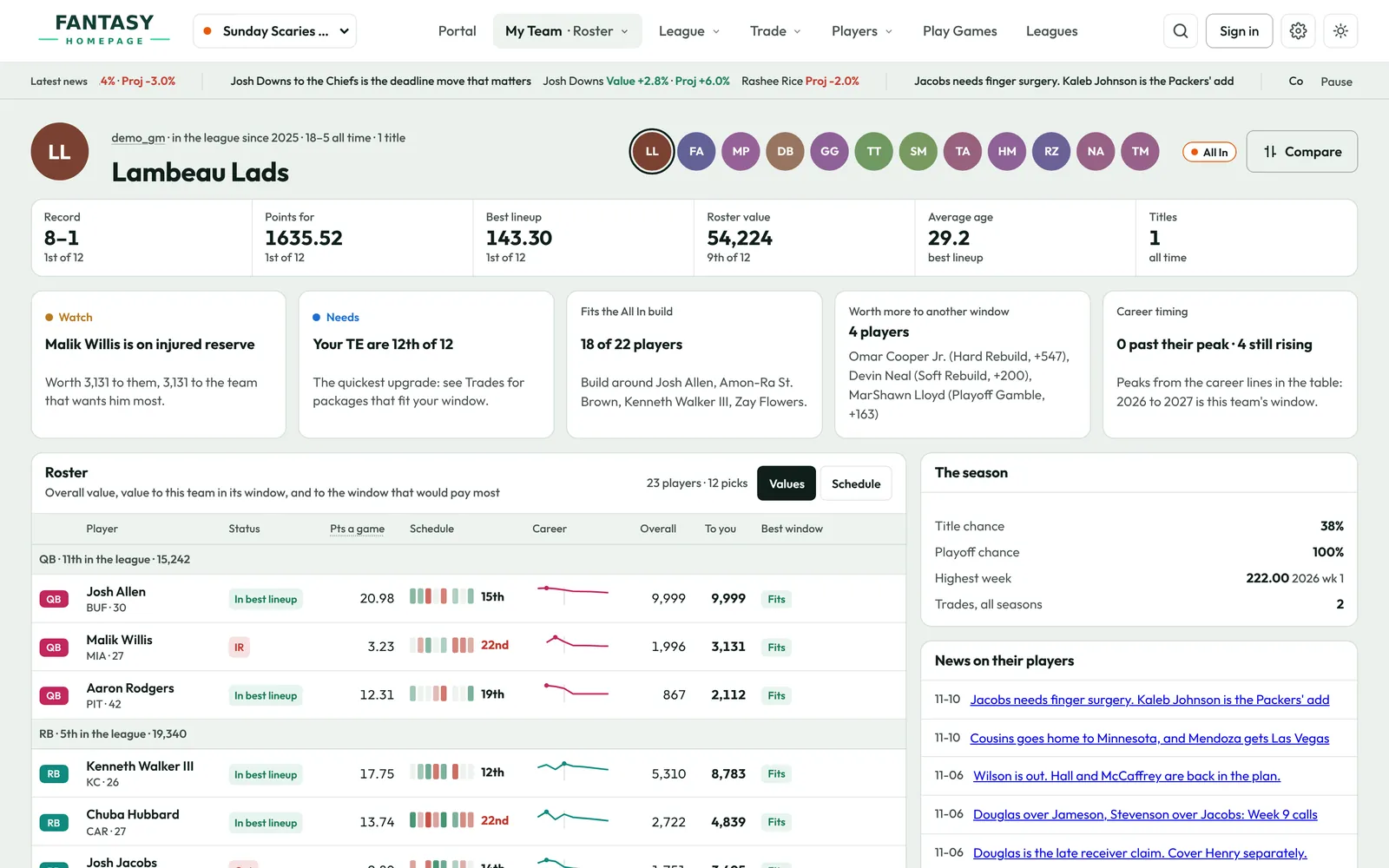
The Roster tab tells you what each player is for. Who fits your build, who'd be worth more to a team in another window, where your weak spot is. Each player gets a small career line so you can see if he's still climbing or past his peak. Flip to Schedule and every remaining game is coloured by how friendly the matchup is.
Trades built from both sides
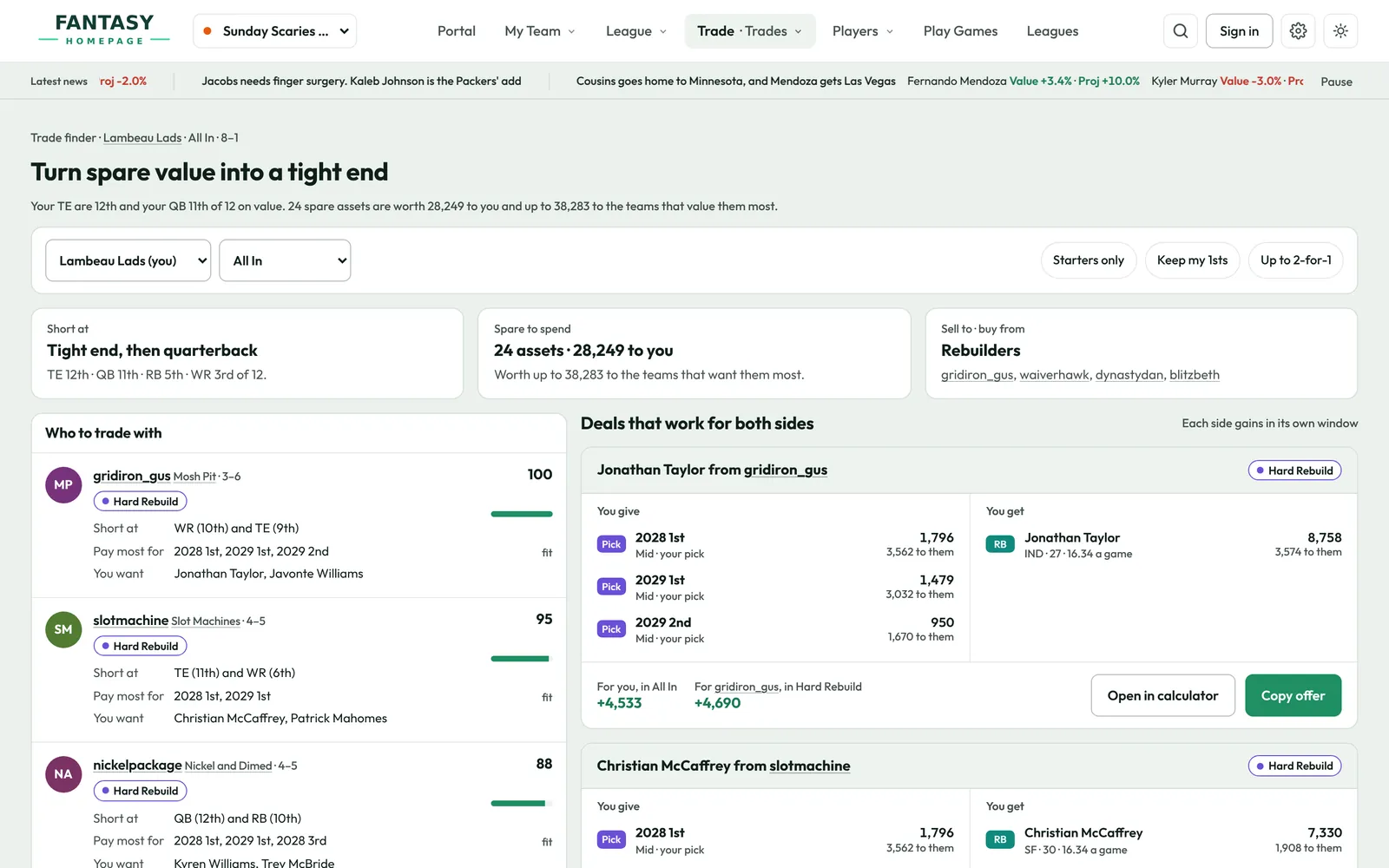
The trade finder looks at what you need, works out which managers have it, and builds packages that help both of you in your own windows. Open one in the trade calculator and it's already filled in. The [dynasty trade calculator]({S}/dynasty-trade-calculator/) also knows your league now: add a player and his manager comes with him, along with that team's window and only that team's assets to choose from.
When your players peak
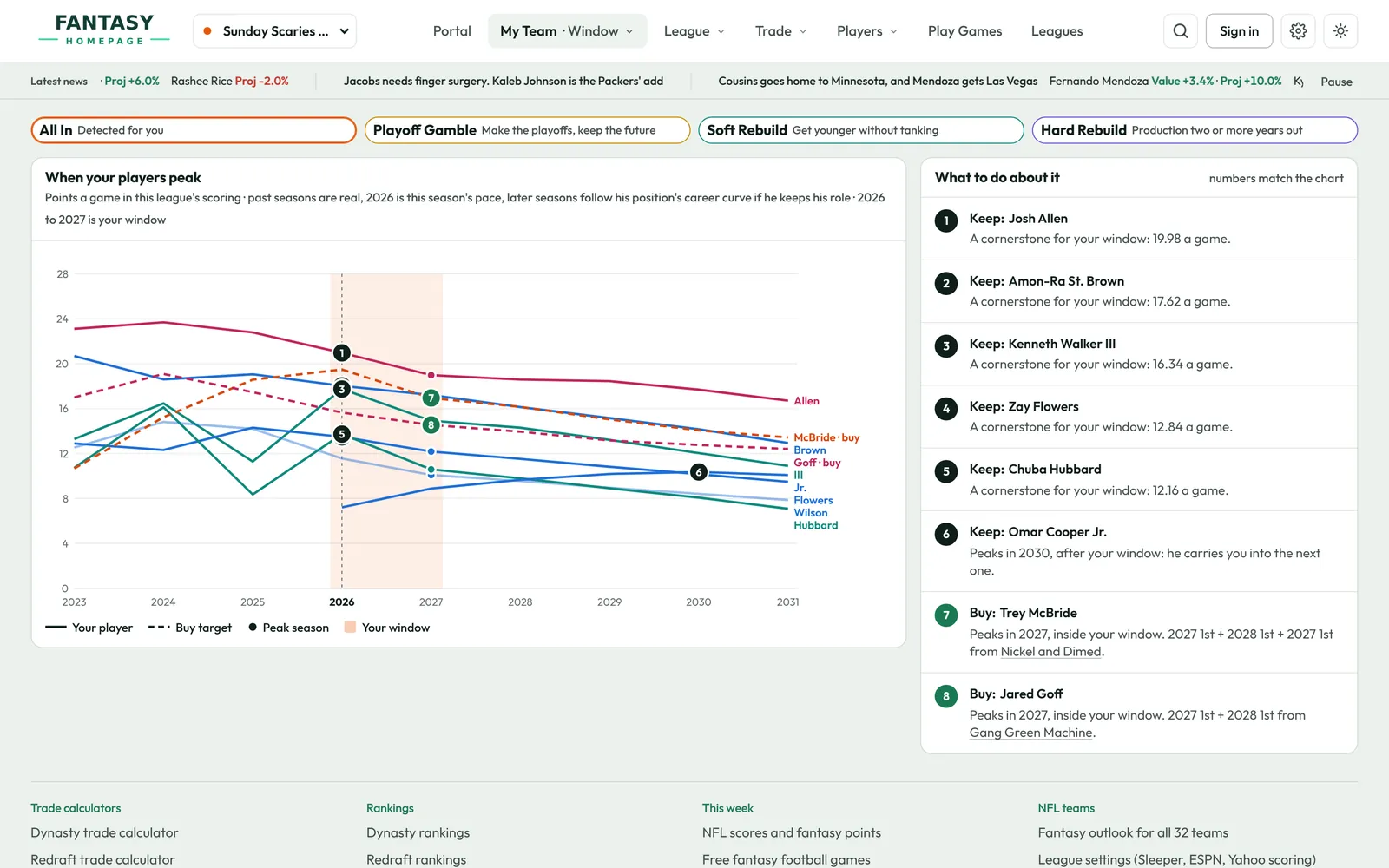
The Window tab charts every player on your roster against the typical career at his position: past seasons are real, future ones are where he's heading. The shaded band is your window. Keep, buy and sell suggestions sit next to the chart, numbered to match.
History, the trophy cabinet and the league paper
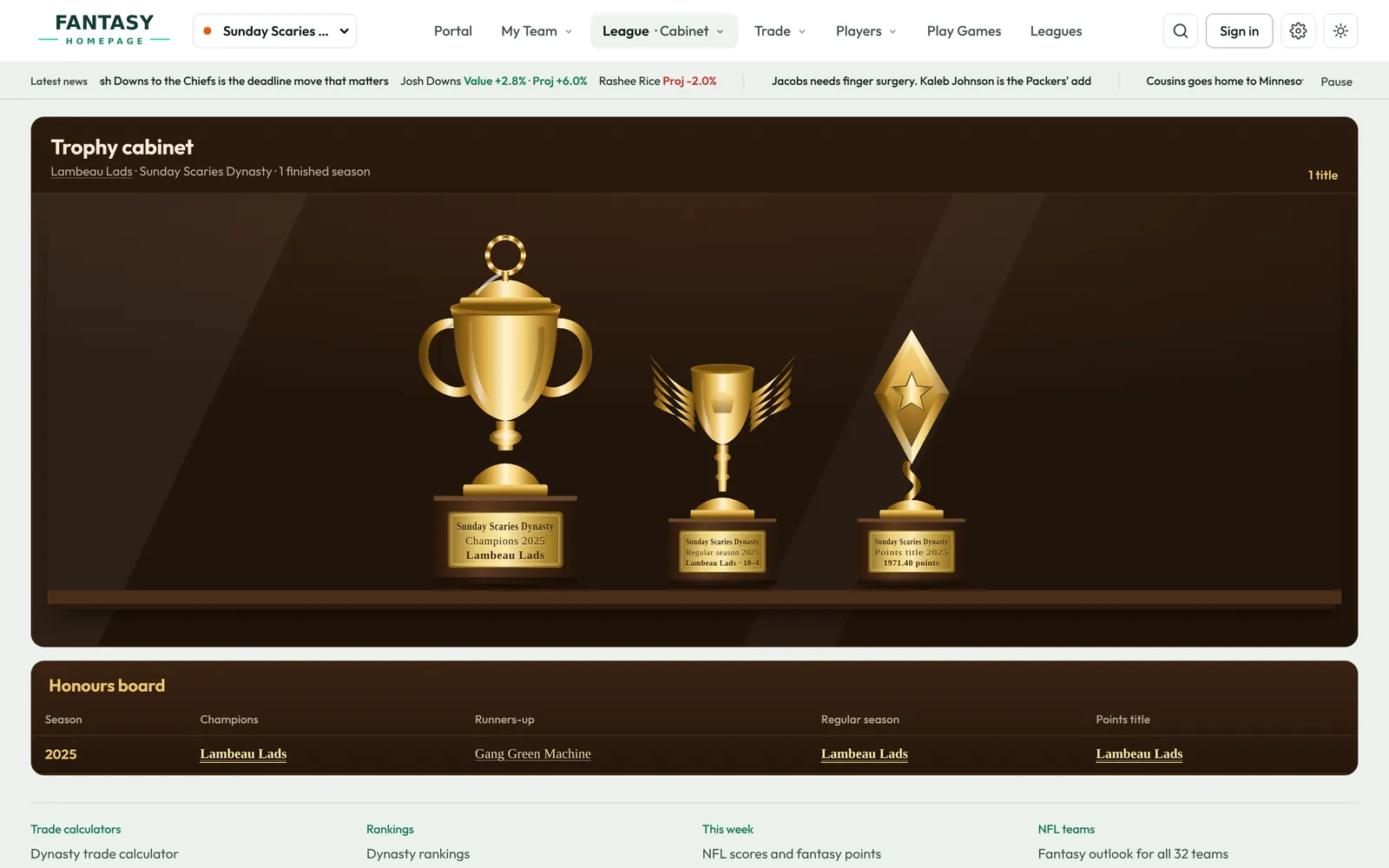
Sleeper's past seasons are pulled in automatically. History turns them into records and oddities: biggest win, unluckiest season, best trader by graded results. The trophy cabinet puts your titles on a shelf, engraved with the league, season and team.
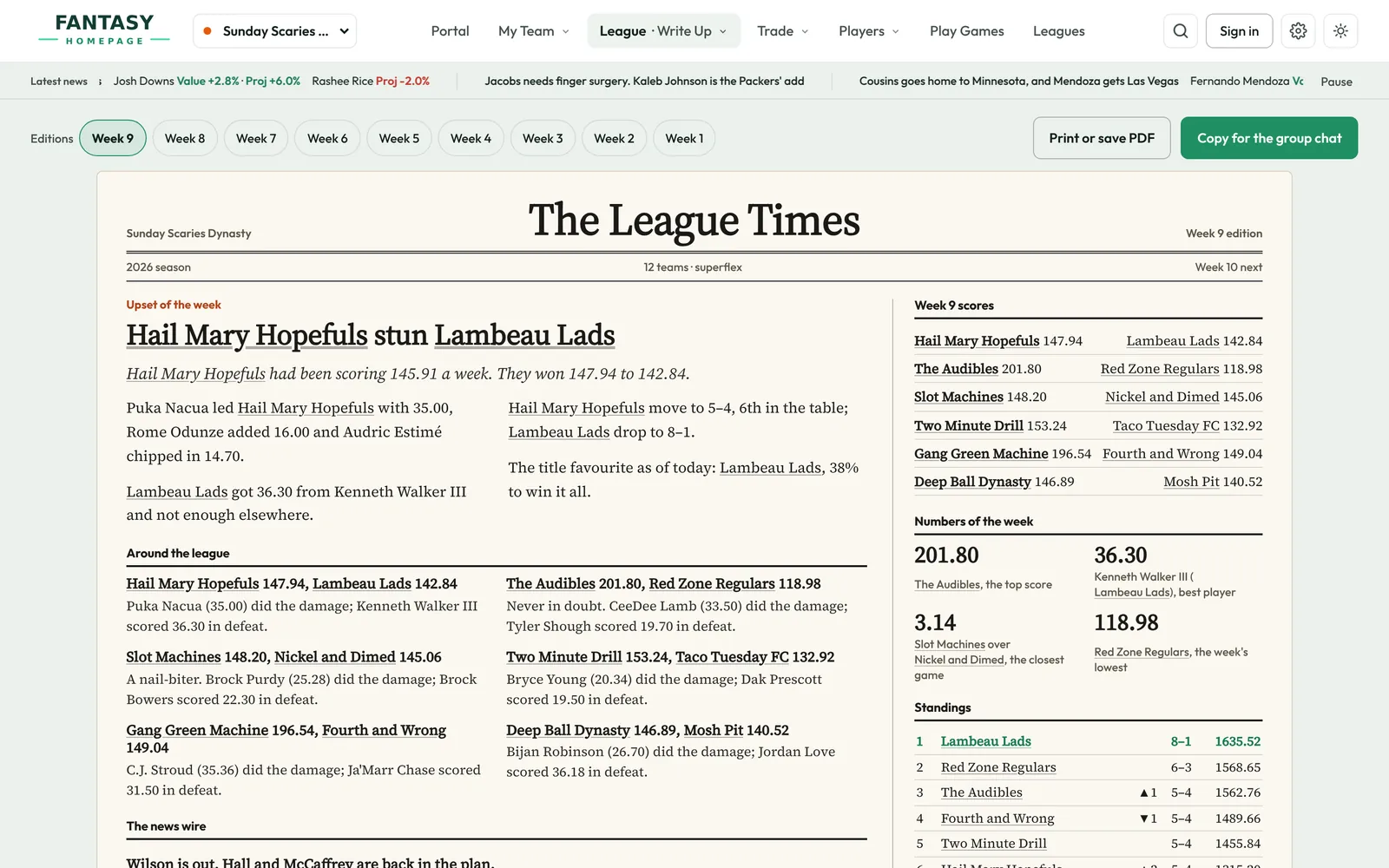
And every week The League Times writes itself: the upset of the week, every score with who did the damage, numbers of the week and the standings. Print it or copy it straight into the group chat.
New on every player card
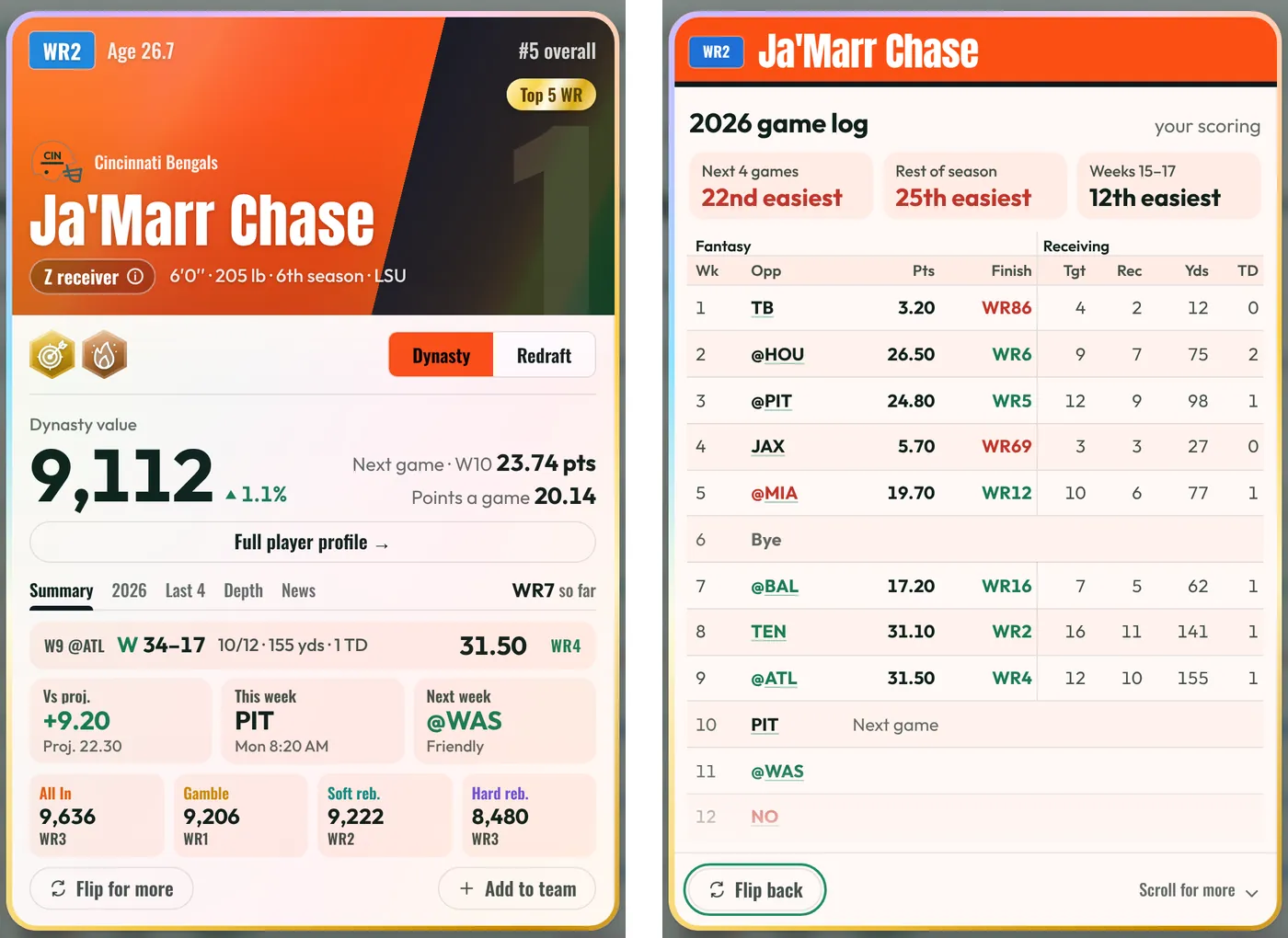
These changes are for everyone, league or no league. The front of each card now opens on a Summary tab: his last game, how he did against his projection, this week's and next week's matchups, and his value and rank in all four windows. Flip it over and you get the full season game log, all 18 weeks, with how tough his next four games, the rest of the season and the fantasy playoffs look.
Legends
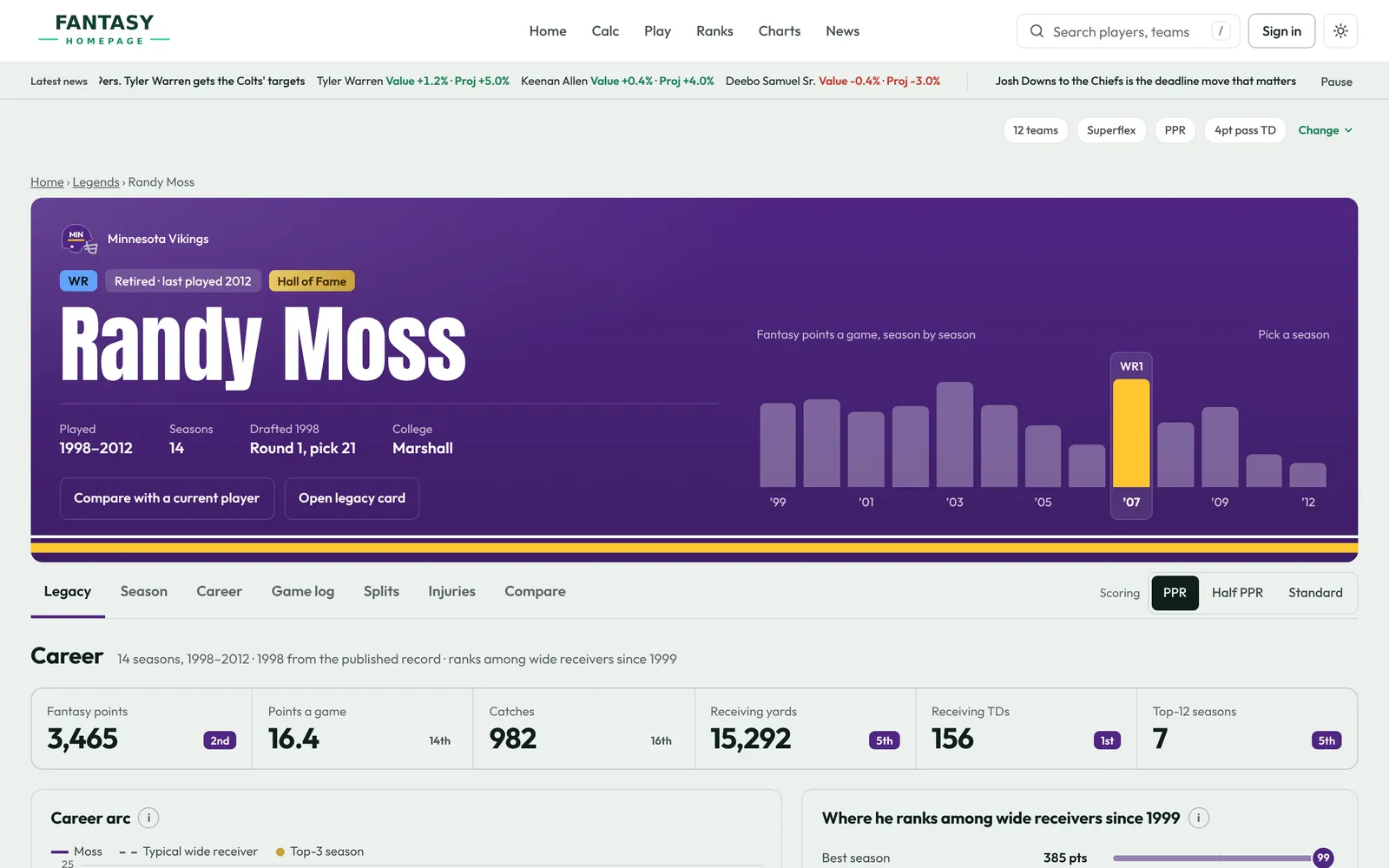
Every fantasy player of note since 1999 now has a legacy profile, built like a current player's page: career, every season, game logs, splits, injuries. Pick a season on the chart to see him at his best. Legends are searchable in the rankings, selectable on the charts, and you can compare any current player against one. Randy Moss's 2007 is a good place to start.
College players get proper pages
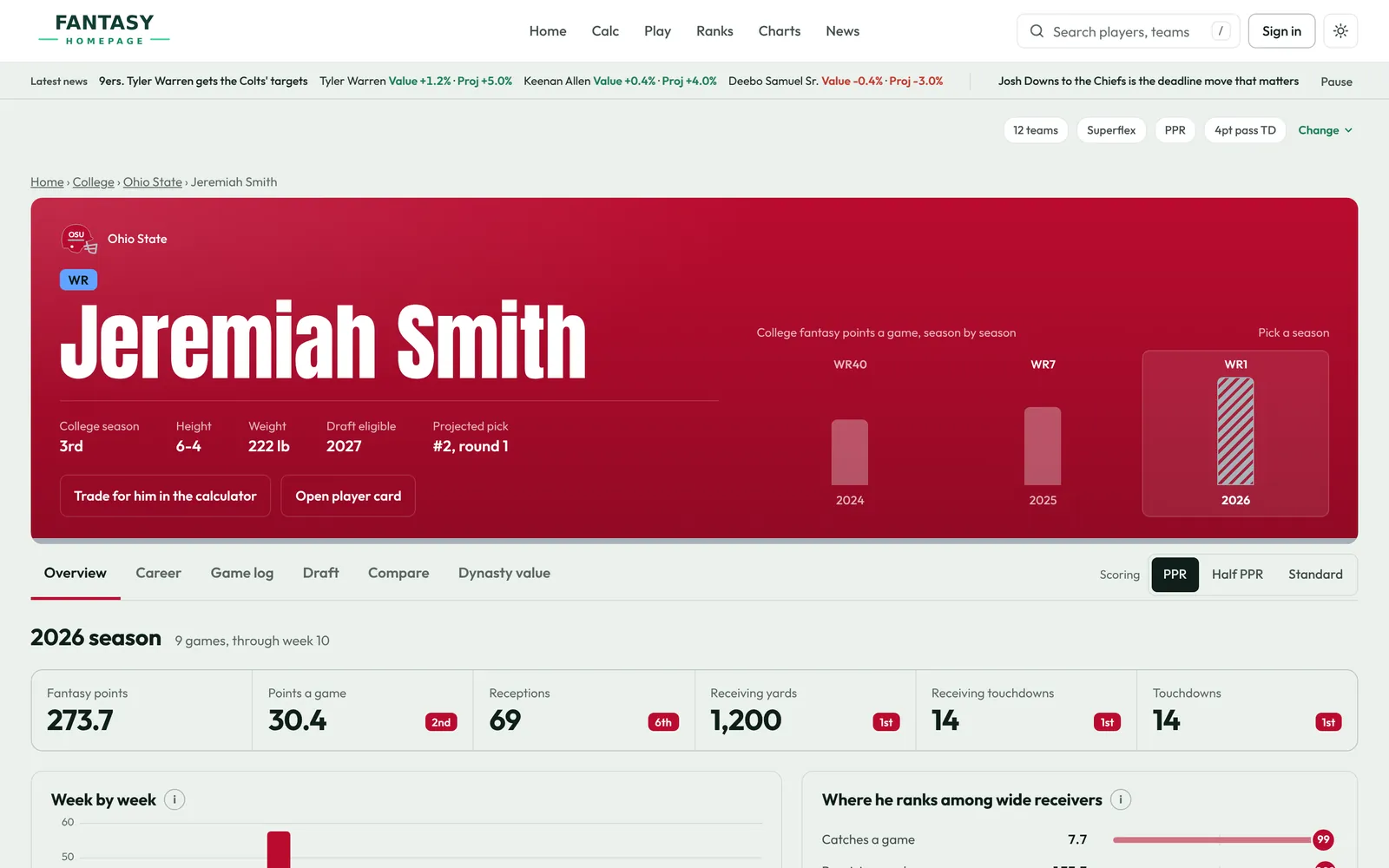
College prospects now have full profiles in their school's colours: game logs, how they rank at their position, where they're projected to go in the draft and which clubs are likeliest to take them, plus players with a similar profile. Jeremiah Smith shows what they look like.
Start/sit calls every week
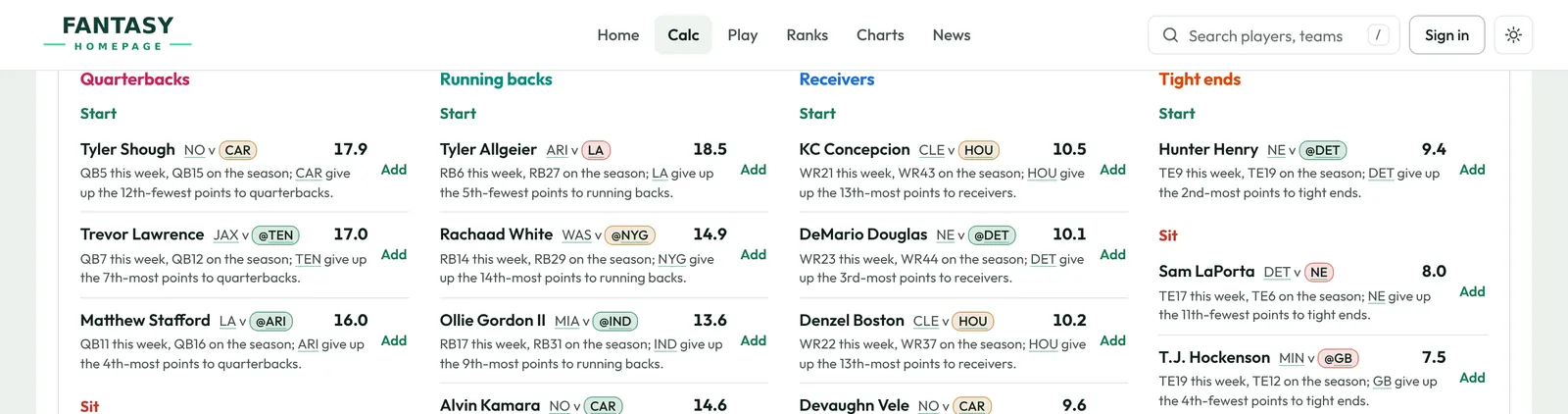
The start/sit tool now opens with this week's calls already made: the players whose week looks different from their season, by position, with the reason. Each player page carries his own call for the week. Add any of them to the tool and compare.
Shares that look right
Anything with a share button now sends a proper preview card, and results from the games get their own address, so a link in a group chat shows the score rather than our homepage.
That's the month. If something's broken or you'd like something built, tell us. Most of what's above started as someone asking.